
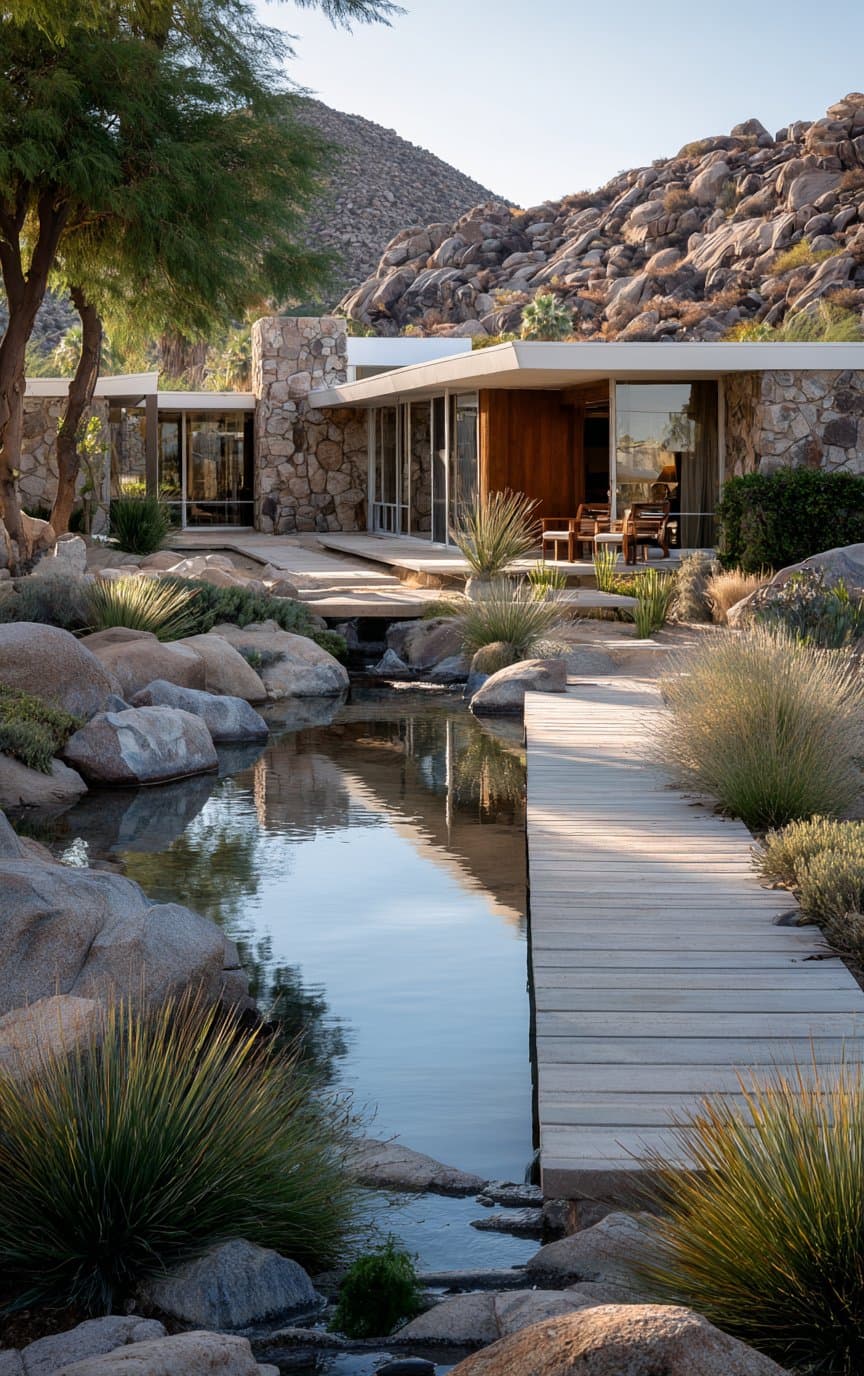
Water-Smart Landscaping
XERISCAPE UTAH
Beautiful, low-water landscapes designed for Utah’s climate. We handle the design and installation start to finish.
Xeriscaping · Water-Smart Landscaping for Utah
What Is Xeriscaping?
Xeriscaping is the practice of replacing water-hungry turf grass with native plants, decorative rock, and drip-irrigated planting beds designed to thrive in Utah’s semi-arid climate. The word “xeriscape” comes from the Greek xeros(dry) and “landscape” — not, as many assume, from any brand or program name. It describes an entire design philosophy: put the right plant in the right place, deliver water only where it’s needed, and let the region’s natural rainfall do the rest.
Utah is among the driest states in the country, averaging 13 to 16 inches of rainfall per year along the Wasatch Front. Water rates have risen steadily for a decade and the state legislature has mandated usage reductions with more on the way. In that context, the traditional bluegrass lawn — which can consume 50 to 75 gallons per square foot per year — is not just environmentally expensive. It is increasingly unaffordable.
A xeriscape project with Xperience follows a proven sequence: design consultation and site measurement, installation (site prep, soil amendment, drip system, plant placement, mulch and rock finish), and a final walkthrough. The result is a landscape that looks intentional and finished and costs far less to maintain.
By the Numbers
3M+ sq ft
Converted Statewide in 2024
100M+ gal
Saved Per Year
30–50%
Typical Water Bill Reduction
The 7 Principles Of Xeriscaping
These seven principles guide every xeriscape project we design — calibrated for Utah’s alkaline soils, clay-heavy subgrades, and punishing August sun.
01
Planning & Design
Start with a scale drawing of your property. Map sun, shade, slopes, and soil before selecting a single plant. An unplanned xeriscape is just rocks with regrets.
02
Soil Improvement
Utah soils are often clay-heavy or alkaline. Amending with compost and gypsum matters as much as plant selection — roots can't establish in compacted, poorly draining ground.
03
Efficient Irrigation
Drip systems deliver water directly to roots, reducing evaporation by up to 70% vs. spray heads — the most efficient way to water a planted bed in Utah's climate.
04
Plant Zoning
Group plants by water need (hydrozoning). Your roses don't belong next to your ornamental grasses. Mixing hydrozones wastes water and stresses both plant groups.
05
Use of Mulch
3–4 inches of organic mulch or decomposed granite suppresses weeds, retains moisture, and moderates soil temperature — a critical factor in Utah's 100°F July heat.
06
Turf Alternatives
Replace turf with native grasses, ground covers, ornamental beds, or hardscape. Each serves a purpose; lawn rarely earns its water when you look honestly at how it gets used.
07
Appropriate Maintenance
Low-water doesn't mean no maintenance. It means smarter maintenance — twice-yearly pruning and a quick drip-line check, rather than weekly mowing, fertilizing, and spray-head repairs.
Plants That Belong In Utah
We select from three hydrozones — xeric, adapted medium-water, and native trees — to build layered, year-round color with minimal irrigation.
Blue Grama Grass
Fine-textured native grass; eyelash seedheads; thrives on 8 in/yr
Utah Serviceberry
White spring bloom, fall berry, wildlife value; deep tap root
Rabbitbrush
Yellow fall bloom, silver foliage; anchor plant for dry slopes
Apache Plume
Feathery pink seed tails June–Sept; tolerates rocky alkaline soil
Russian Sage
Lavender spikes all summer; deer-resistant; requires full sun
Showy Milkweed
Monarch host plant; pink fragrant flowers; naturalizes in moister spots
Utah Penstemon
Scarlet tubular blooms; hummingbird magnet; minimal water once set
Desert Willow
Orchid-like pink flowers; fast growth; excellent for part-shade spots
Gambel Oak
Utah’s signature native oak; red fall color; drought-hardy once established
Three-Leaf Sumac
Multi-stem shrub-tree; red fall color; xeric once established
Western Redbud
Brilliant magenta spring bloom; heart-shaped leaves; 15–20 ft
Bigtooth Maple
Utah’s best native fall color tree; orange/red Oct display
Common Questions
What’s the difference between xeriscaping and just killing your lawn?
A proper xeriscape replaces turf with a designed system: drip-irrigated planting beds with the right plants for Utah’s climate, properly amended soil, mulch or rock groundcover, and efficient irrigation. Bare dirt or gravel without planting is not xeriscaping.
How long does a xeriscape project take?
Most residential conversions take 3–7 days of installation after the design phase. Starting with a clear design plan early in the season keeps the project on schedule.
Can I xeriscape in Salt Lake City specifically?
Yes. Note that SLC bans artificial turf in front yards and corner side yards — a xeriscape using native plants and rock is the SLC-compliant alternative.
Free Estimates · Salt Lake Valley
Start Your Xeriscape Project
Tell us about your project and we’ll walk the site, talk through the design, and put together a clear plan before a single shovel goes in the ground.
Xeriscape Utah
Xperience Landscaping · (385) 417-5865 · Salt Lake Valley